Annual Report on Roots of Change Impacts
December 17, 2025 Roots of ChangeDear friends and allies,
This year, I offer my annual update on Roots of Change from NYC, where I am completing the manuscript of a book I have long labored over and sought to finish. Before sharing about that, let me say it was another year in which ROC’s leadership in advancing the work to fix our food system was very clear. See my highlights below and please consider supporting our work once again.
Demonstration Projects that Model How to Fix Food
We continued our 2.5-year Resilient Food System Infrastructure project to map and envision food processing that will serve California’s small and mid-scale farmers of fruits, nuts and vegetables. We have engaged stakeholders across the state through dozens of individual and group interviews. With their input and the funds provided by a partnership between CDFA and USDA, we will deliver to the funders, the Legislature, economic developers, and food entrepreneurs, a report that contains a statewide map of existing and planned infrastructure (mills, presses, preservation, cut and wash facilities, food hubs, etc.) scaled for regional supply chain development. Most importantly, the project will spawn additions to hard and soft infrastructure. The goal is to create more resilient sources of food in a time characterized by disruptions from fire, flood, pandemic, and trade disputes. Although other states have undertaken similar efforts, our project is of a much larger scale that has prompted other states to ask us to advise them.
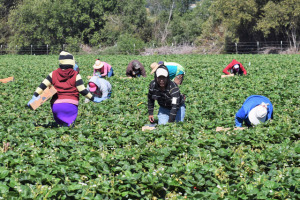
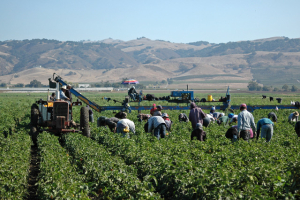
In another groundbreaking initiative, we are leading the development of a resilience hub and cooling center for a small farmworker community in Tulare County, where extreme heat can kill. We partnered with the Terra Bella Unified School District, which obtained funds to build an indoor gym. We applied to Governor Newsom’s Office of Land Use & Climate Innovation and received an additional $2.5 million that will go towards purchasing the additional equipment needed to ensure a cool and safe space to temporarily accommodate families during extreme heat events. This project will demonstrate the ways of leveraging existing common structures for extreme weather response. We are creating a guide on the uses of the Hub and Cooling Center and a curriculum in Spanish that will extend information to families on how to protect themselves from heat stress and illness before such events occur. Our project partner, Central California Environmental Justice Network, is distributing thousands of resilience kits to farmworkers in four counties to help them stay cool in the field. Our other partners, UC Berkeley and UC Agriculture & Natural Resources, are conducting research in collaboration with farmworkers and farming companies to devise additional ways to protect workers in the field and to investigate the effects that heat is having on workers. Coco Sanabria, is leading both the CDFA/USDA and Resilience Hub projects for us.
Policy Work
Alongside the broader suite of bills and budget actions championed by ROC in 2025, I am pleased to highlight the passage into law of Assembly Bill (AB) 411 cosponsored with the California Cattlemen’s Association and authored by Assemblymember Diane Papan. In recent years, ROC has recognized shared priorities with California’s cattle producers: protecting grazing lands, advancing solutions to the climate crisis, strengthening local and regional markets, and supporting the long-term economic viability of ranching families. AB 411 removes a longstanding barrier that prohibited ranchers from composting routine on-farm livestock mortalities—animals that die due to illness, predators, or, increasingly, catastrophic wildfires. This bill authorizes the safe composting of livestock mortalities, a practice that returns organic matter to the soil, improves soil fertility, reduces transportation and incineration needs, and cuts emissions associated with conventional disposal. It provides ranchers with practical solutions grounded in scientifically validated procedures that protect both public health and the environment. Critically, AB 411 advances California’s climate goals while supporting a more resilient and economically viable ranching sector. It is a win-win policy. Matthew Marsom, ROC’s Policy and Strategic Advisor, led our work in helping secure this important victory.
Education & Outreach to Inspire Action
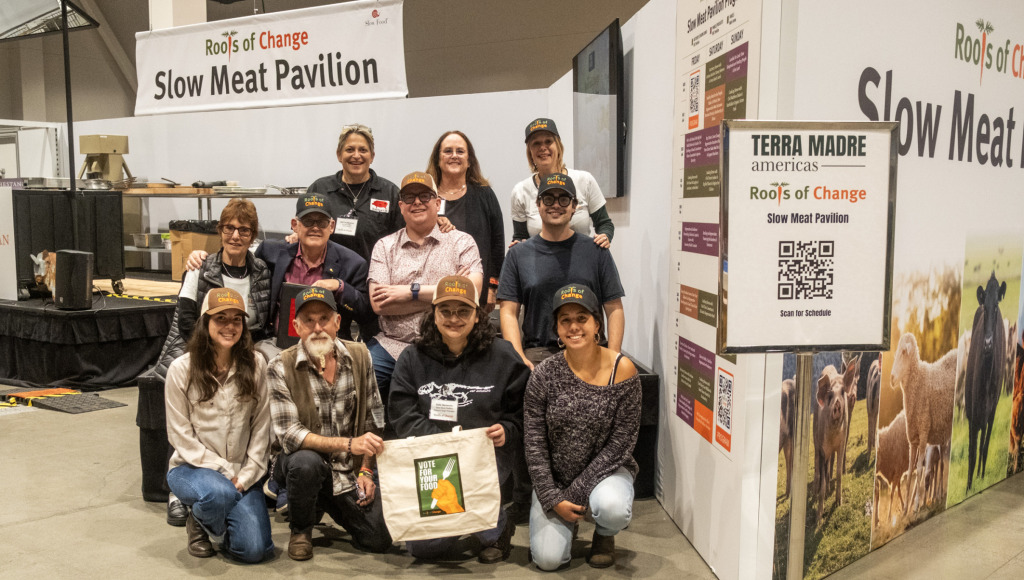
Perhaps the most visible impact this year was our central role in ensuring that the first Terra Madre Americas would succeed. The event’s primary organizers from Visit Sacramento and Slow Food International have shared that ROC broke the dam of doubt. When ROC committed to the event, a flood of others followed. Creating our Slow Meat Pavilion to promote consumer commitment to good meat from farmers and ranchers using regenerative practices was a huge lift for us. And it paid dividends. At least 160,000 people attended the 3-day event! We touched thousands with our 18 featured producers who sold products and engaged attendees. Our 21 cooking, butchery, and live podcast programming were acclaimed as spectacular. We hope you are experiencing some of that programming available now as a special podcast series on Flipping the Table. Terra Madre could not have worked without our three Stanford and UC Berkeley Interns (Anna Kathawala, Dalia Hernandez, and Jacob Dunlop) and our long list of volunteers. Duskie Estes, our esteemed and talented culinary director, ensured a lineup of “ROCk-star” chefs and butchers that wowed the crowds. Although Matthew and Coco carried huge responsibilities, much of the success was due to the detailed and untiring work of our event organizer and chief diplomat, Doris Meier. She made sure all materials were completed and that our interns, volunteers, special guests, speakers, producers, and suppliers had accommodations, and remained in motion and on time.
Thought Leadership that Helps Create the Future
It is part of our mission to share our thoughts on strategy and needs with our allies, policymakers, and food producers. We use social media, our podcast, and written documents to do this. We are in the final stages of issuing a white paper that emerged from projects we co-led to feed 30,000 vulnerable families in Los Angeles during the pandemic years and hundreds of clinical patients in Stockton providing support through a food as medicine initiative to help prevent or treat diet-related disease. The paper argues for more investment in Community Based Organization (CBO) networks, which are vital to achieving success in emergency feeding situations like the pandemic or megafires, and for successful long-term nutrition security interventions mounted by clinicians. The paper also argues that investments in the development of local and regional food supply chains achieve two outcomes simultaneously. First, it creates jobs and income that attack the core problem of nutrition insecurity, which is poverty. Second, it builds resilience in our food supply chains, which the pandemic exposed to be extremely vulnerable, by strengthening local communities and investment. Finally, the paper offers state and local policymakers model language to help direct more public dollars into the priority areas we recommend. The primary authors of the paper are Coco Sanabria, Matthew Marsom, and Betty Sun from Center for Wellness & Nutrition, a sister PHI program.
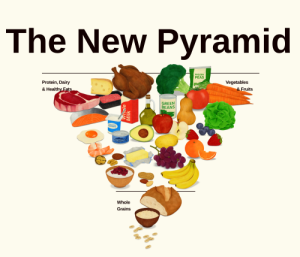
To close, let me share that my book is tentatively titled: Warriors, Weavers & Builders: How the Movement to Fix Our Food Could Help Transform the World. It is my take on the history of the broadly based, multifaceted social movement with which I identify. It weaves in descriptions of experiences and many farmers, ranchers, activists, and philanthropists who have inspired, taught and supported me over nearly 30 years of work. Ten chapters make the case that there is a movement (which some doubt) that merges many streams of activity promoting organic and regenerative agriculture, regional food systems, farmworker rights and opportunities, nutrition security, and policy change. The 11th and final chapter is a description of the food system that I believe will best serve us best in the 21st century and beyond and what conditions are needed for such a transformation to take place. Overall, the book argues that the guiding principles and goals from the many streams described, if combined and applied in the world, would go a long way to solving most of our ecological, social, economic, and political crises. I can make this argument because the food system is the base system of civilization, impacting all aspects of our lives, whether we see it or not.
The book and ROC’s work are an appeal to current and future leaders in advocacy, philanthropy, policy, and business to become involved in fixing our food system, as you have been doing for years. I want to thank you for staying connected and supportive of ROC and me; it has made our successes possible. As 2025 comes to an end, please consider making a donation. With you on our side, we will continue our expanding impact on food, farms, and the future. Warm regards and appreciation,
Michael R. Dimock
Executive Director
2025 impacts, 2025 review, Annual report, demonstration projects, education & outreach, impacts, policy work, thought leadership