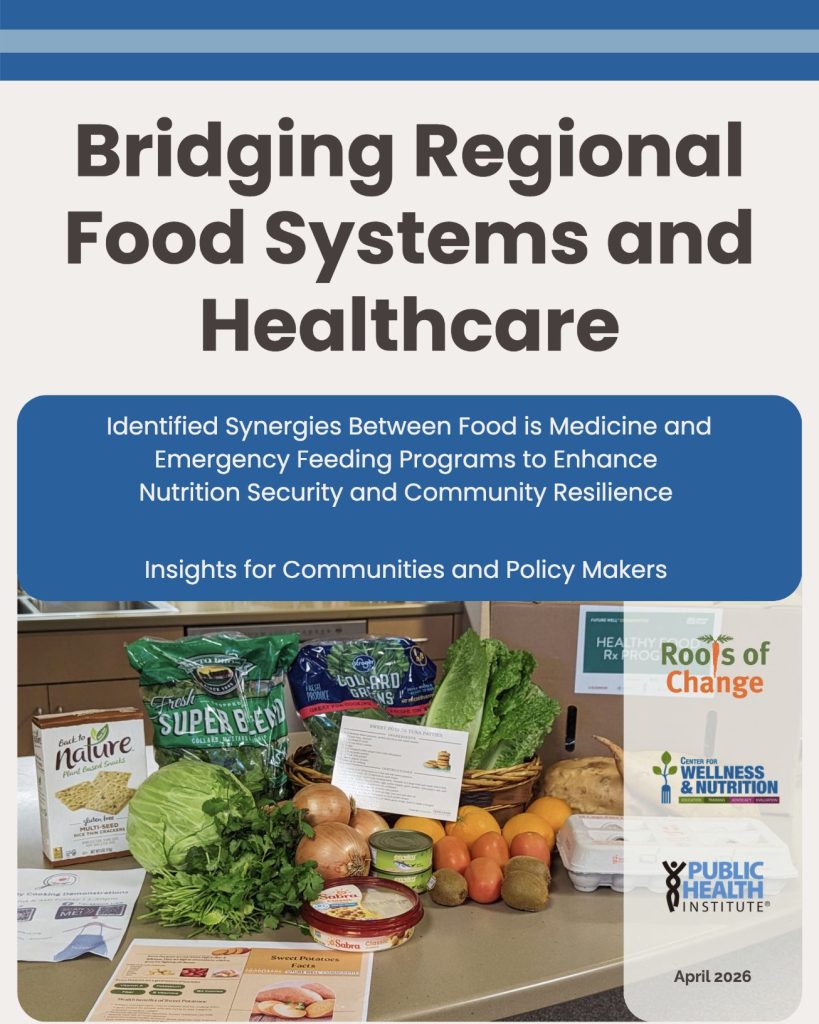
Bridging Regional Food Systems and Healthcare to Build Nutrition Security and Community Resilience
April 15, 2026 Roots of ChangeIn recent years, communities across the U.S. have faced a relentless series of disruptions that have tested lives, livelihoods, and the systems people depend on every day. In 2025, Los Angeles experienced the single costliest wildfire in U.S. history. In 2024, the eastern seaboard and the south experienced an onslaught of hurricanes. In 2023, Maui was shaken by the deadliest wildfire ever in the U.S., and the year before that, the U.S. experienced both deadly winter storms, extreme drought, and heat waves that each claimed hundreds of lives. At the same time, the lingering societal impacts of COVID-19, rising rates of diabetes and obesity, and growing instability due to cuts to safety net programs have added to the strain. The need for stronger community preparedness and resilience has never been clearer.
As communities face these mounting disruptions, healthy food access is often one of the first things to break down. When it does, the consequences are immediate: worsening nutrition insecurity, deepening health inequities, and increasing strain on families and communities, particularly those who are low -income.
As a policy leader and think tank working at the intersection of agriculture, nutrition, public health, and community resilience, Roots of Change scans across emerging trends, risks, and opportunities shaping the future of our food system. In doing so, we identified a pressing need for approaches that not only respond to immediate disruptions, but also build the long-term resilience communities need to thrive. That is what led us to partner with the Center for Wellness and Nutrition to release a new white paper, Bridging Regional Food Systems and Healthcare, to help chart a better path forward, advancing our mission to help build a food system that is healthy, fair, and resilient.
The paper makes a clear case: nutrition security and community resilience must be addressed together. Our current food system is too dependent on long, consolidated supply chains that are optimized for efficiency, not resilience or equity. When disruptions hit, communities facing structural barriers are hit first and hardest. The answer is not simply to respond faster to a crisis. It is to build stronger, more resilient systems before the next crisis arrives.
Drawing on lessons from three California programs — #LetsFeedLACounty, the Los Angeles County Grocery Voucher Program, and Healthy Food Rx in Stockton — the white paper shows that better outcomes are possible when healthcare, community-based organizations, and food access strategies are intentionally linked. These programs helped households weather acute shocks, improved food security, and, in Stockton, supported better health outcomes for people managing diabetes.
The bigger lesson is clear: emergency food response and Food is Medicine strategies should not sit in separate silos. They should be connected, strengthened, and designed to build lasting resilience.
The white paper highlights three core recommendations.
1) We must strengthen community-based organizations. CBOs are often the most trusted messengers and the first responders in moments of crisis. They need durable, flexible support, stronger coordination, and a clear role in planning and implementation.
2) We must integrate local and regional food into healthcare. Healthcare systems can be powerful anchors for improving nutrition security while also creating more reliable, community-based food supply pathways. Food is Medicine programs should not only improve patient outcomes; they should also help build markets for local and regional producers.
3) We must diversify and strengthen local and regional food system infrastructure. That means investing in the practical backbone communities need to adapt under stress: aggregation, processing, storage, distribution, food hubs, and other pathways that make healthy, culturally relevant food more accessible every day and during emergencies, while also building community infrastructure and supporting economic development in rural and urban communities.
This is not only a road map for change in the food system. It also sets out actions that address public health, economic development, and anti-poverty solutions, and to build community resilience. The paper also includes model policy language to help leaders translate these ideas into concrete legislative, regulatory, and programmatic action. If we are serious about improving health, preparing for future disruptions, and building food systems that are healthy, fair, and resilient, then we must invest now in the community infrastructure and regional food economies that make those outcomes possible.
To help move these recommendations forward, we encourage policymakers, public health leaders, healthcare institutions, community organizations, and advocates to use the model policy language in ways that fit your local context and build momentum for action in the community. This could include passing a resolution by a city council or county board of supervisors, or including the language within a state or local policy to inform the design and implementation of a program.
If you use this policy language in your work, we hope you will let us know. We have created a tracker so we can learn where these ideas are being used, understand how communities are adapting them, and stay connected to efforts advancing this work on the ground. Please share your impacts with us!
We hope this white paper helps leaders think differently about what it takes to keep communities healthy and prepared in a time of compounding disruptions.
Read the white paper here.
View the model policy language here